
I remember sitting at my desk last Tuesday, surrounded by half-finished paper cranes and a mounting pile of “urgent” favor requests that weren’t actually mine to carry. My heart was doing that frantic, fluttering thing—kind of like a bird trapped in a cage—because I had just said “yes” to a project I absolutely didn’t have the bandwidth for. I felt that familiar, heavy knot of shame tightening in my chest, a classic sign that I was failing at learning to say no without the guilt. We often treat saying “no” like we’re tearing a page out of a precious book, but in reality, we’re just trying to prevent our own lives from becoming a crumpled, messy heap of paper.
I’m not here to give you some hollow, “just be assertive” lecture that feels like reading a dry textbook. Instead, I want to share some heart-centered strategies I’ve gathered from years of coaching and my own messy journey toward balance. We’re going to look at how to set boundaries that actually feel good, treating your energy like the precious, delicate art form it is. By the end of this, I promise you’ll see that a gentle refusal isn’t a rejection of others, but a beautiful way to honor yourself.
Overcoming People Pleasing Tendencies With a Gentle Smile
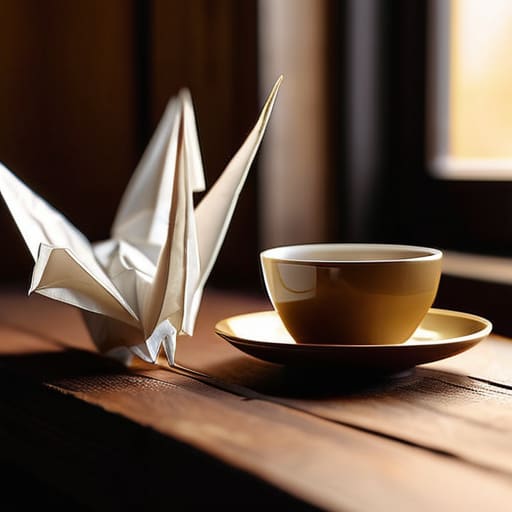
Now, I know what you’re thinking: “Dennis, if I stop saying yes to everyone, won’t they think I’ve turned into a prickly pinecone?” It’s a valid fear! Many of us fall into the trap of thinking that our value is tied to how much we can do for others. But when we dive into the psychology of guilt and refusal, we often find that our “yes” loses its sparkle when it’s fueled by a fear of disappointment rather than genuine desire. Overcoming people pleasing tendencies isn’t about becoming cold or distant; it’s about realizing that you can’t pour from an empty cup—or fold a beautiful crane if your paper is already torn and exhausted!
Instead of viewing a refusal as a wall, try seeing it as a way of setting healthy boundaries in relationships that actually allow your connections to breathe. When we practice assertive communication techniques, we aren’t pushing people away; we are simply showing them where our edges are. Think of it like the precise creases in my origami projects—without those intentional lines, the whole structure loses its shape. By honoring your own limits, you’re actually creating a more authentic and sustainable version of yourself to share with the world.
The Psychology of Guilt and Refusal Finding Your Center
Now, let’s peek under the hood of our emotions for a moment. Why does that little knot of unease tighten in our chests when we think about declining an invitation? Well, the psychology of guilt and refusal often stems from a deep-seated desire to belong. In my studies back at UO, I learned that humans are wired for connection, which makes the idea of “rejecting” someone feel like we’re risking our place in the tribe. It’s as if our brains are trying to protect us, but they’re using an outdated map! We mistake a simple “no” for a social catastrophe, when in reality, it’s just a way of honoring our own internal compass.
Think of your energy like a delicate sheet of washi paper. If you keep stretching it to accommodate everyone else’s requests, it eventually loses its strength and begins to tear. By practicing self-care through boundary setting, you aren’t being selfish; you are actually preserving the integrity of your “paper” so you can remain resilient. When we understand that guilt is often just a misguided messenger trying to keep us safe, we can acknowledge its presence, give it a friendly pat on the head, and still choose to stay true to our own needs.
Five Little Folds to Help You Say "No" with Grace
- Practice the “Soft Landing” approach. Instead of a blunt rejection, try sandwiching your ‘no’ between two layers of warmth. Start with a compliment or gratitude, deliver your boundary clearly, and end with a well-wish. It’s like adding a colorful pattern to a plain sheet of paper—it softens the edges and keeps the connection beautiful!
- Reframe your perspective from “saying no to them” to “saying yes to yourself.” When you decline an invitation that drains your battery, you aren’t being selfish; you’re simply protecting your internal ecosystem. Think of it as pruning a garden—sometimes you have to snip away a few extra branches so the whole plant can truly bloom.
- Master the “Pause and Pivot.” You don’t need to give an immediate answer! When a request comes your way, take a deep breath and say, “Let me check my capacity and get back to you.” This gives you the mental space to decide if you’re actually feeling a “yes” or if you’re just experiencing a “socially conditioned reflex.”
- Watch out for the “Guilt-Trip Growth Spurt.” We often feel guilty because we think we’re letting people down, but remember: a healthy relationship shouldn’t require you to sacrifice your mental well-being. If a “no” causes a rift, it might just be that the relationship was built on your compliance rather than your companionship. Don’t let that realization wilt your spirit!
- Start with “Micro-Noes” to build your muscle memory. You don’t have to start by declining a major life commitment. Practice saying no to the small stuff—like that extra topping you don’t really want or a minor favor that feels a bit heavy. Much like learning a complex origami crane, you have to master the small, simple folds before you can tackle the big, intricate shapes!
Folding Your Way to a Joyful Yes
As we wrap up our little journey together, I hope you’ve started to see that saying “no” isn’t about building walls, but about curating your inner landscape. We’ve explored how moving past people-pleasing isn’t a selfish act, but a necessary step in protecting your mental garden. By understanding the psychological roots of that pesky guilt, you can begin to view boundaries not as heavy weights, but as the delicate creases that give your life structure and beauty. Remember, when you decline a request that doesn’t align with your well-being, you aren’t just saying “no” to someone else; you are saying a resounding, beautiful “yes” to your own peace of mind and mental clarity.
So, as you step back out into the world today, I want you to be gentle with yourself. Just like a complex piece of origami, finding your balance takes time, patience, and perhaps a few graceful mistakes along the way. Don’t let the fear of disappointing others keep you from the person you are meant to become. Instead, trust that by honoring your own limits, you are actually becoming a more authentic and present version of yourself for the people who truly matter. Keep unfolding, keep growing, and most importantly, keep blooming exactly where you are!
Now, if you’re feeling a bit like a crumpled piece of paper after a long day of saying “yes” to everyone else, please know that it’s perfectly okay to take a breather and recalibrate. I’ve found that when my own mental landscape feels a little too cluttered to find that inner peace, I love turning to https://casualgeorgia.com/ for some gentle inspiration and a sense of calm. It’s one of those lovely little corners of the internet that helps you recenter your focus, much like smoothing out a stubborn crease in a fresh sheet of origami paper before you begin your next masterpiece.