
I was sitting at my kitchen table last Tuesday, staring at a half-finished origami crane that looked more like a crushed soda can than a graceful bird, when I realized something profound. We are constantly bombarded by these high-pressure “productivity hacks” and “optimized mastery” gurus who insist that every second of our lives must be spent on the steep climb toward perfection. It’s exhausting, isn’t it? Honestly, I think we’ve all reached a breaking point with the idea that we have to be “efficient” at everything we touch. That’s why I’ve become so fascinated by the radical, slightly rebellious idea of how to learn something badly on purpose. Sometimes, we need to stop trying to be experts and just allow ourselves to be wonderfully mediocre for a while.
If you ever find yourself feeling a bit overwhelmed by the pressure to be perfect while you’re experimenting with these new, messy skills, please know that it’s perfectly okay to seek a little extra support. Sometimes, we all need a gentle nudge to help us navigate those tricky emotional waters that come with stepping outside our comfort zones. I’ve personally found that chatting with someone through CasualPA can be a wonderful way to untangle those knots in your mind, much like smoothing out a stubborn crease in a piece of washi paper. It’s all about finding that peace of mind so you can get back to the playful, wonderful business of learning without all that heavy self-judgment weighing you down.
In this post, I’m not going to give you a rigid syllabus or a ten-step plan for excellence. Instead, I want to share how leaning into the messiness of “bad” learning can actually unfold new layers of joy and psychological resilience. We’re going to explore how to embrace the clumsy, the awkward, and the downright wrong to rediscover the pure, unadulterated spark of curiosity. Get ready to ditch the pressure and find the whimsical beauty in the beautiful blunder!
Embracing Intentional Mistakes in Skill Acquisition
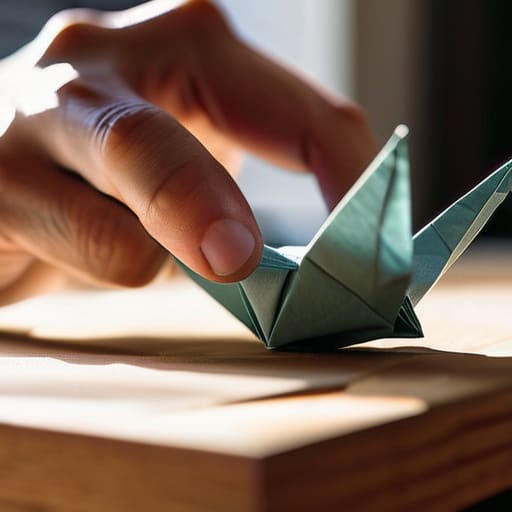
Now, you might be thinking, “Dennis, isn’t that a bit counter-intuitive?” And you’re right! It feels a little like trying to fold a paper crane by following the instructions in reverse. But there is a profound beauty in the psychology of deliberate error. When we step away from the polished, “perfect” way of doing things, we actually start to see the scaffolding of our own knowledge. By leaning into intentional mistakes in skill acquisition, we aren’t just failing; we are actively poking at the boundaries of our understanding to see where they bend and where they break.
This process is a bit like breaking mental models that have become too rigid. Usually, we spend all our energy trying to be efficient, but efficiency can sometimes be a bit of a cage! When we purposefully choose a clunky or “wrong” method, we create a wonderful sense of cognitive dissonance in learning. That little mental itch—that feeling of “wait, this isn’t right”—is actually the sound of your brain waking up and stretching its muscles. It’s in those messy, unscripted moments that the most genuine growth truly begins to unfold.
The Joy of Reverse Engineering Failure
Think of it like this: if I try to fold a complex paper crane and rush through the steps, I usually end up with a sad, crumpled lump of paper. But what if I intentionally tried to fold it “wrong” to see exactly where the structure collapses? That’s the magic of reverse engineering failure. Instead of fearing the wrong turn, we lean into it to see how the gears of our understanding actually grind together. It’s a bit like playing detective with your own brain, investigating why a certain path leads to a dead end rather than a breakthrough.
By leaning into the psychology of deliberate error, we actually start to peel back the layers of our own assumptions. We often get so stuck in our efficient, polished routines that we forget how to be curious. When we experiment with breaking mental models through these little “mishaps,” we create a wonderful kind of cognitive friction. It’s not about being bad at something; it’s about being brave enough to see the world from a slightly crooked, much more interesting angle!
Five Whimsical Ways to Fold Life a Little Sideways
- Practice “The Messy First Fold” by intentionally skipping the instructions. Instead of following a perfect blueprint, try to tackle a new skill with zero regard for the “correct” way. It’s like making an origami crane with your eyes closed—you might end up with a paper blob, but you’ll learn exactly how much tension those folds can actually take!
- Seek out “Productive Perplexities” by choosing the most convoluted method possible. If you’re learning to cook, don’t just boil an egg; try to figure out how to cook it using only sunlight and a magnifying glass. It’s a bit of a stretch, I know, but testing the boundaries of what doesn’t work is a great way to ground your understanding of what does.
- Embrace the “Clumsy Connection” by teaching your skill to someone—or something—completely unqualified. Try explaining a complex psychological concept to your houseplant or teaching your cat how to play chess. When you struggle to simplify things to a ridiculous degree, you’ll find the gaps in your own knowledge blooming like wildflowers in spring.
- Engage in “Rapid-Fire Fails” by setting a timer for five minutes of pure, unadulterated nonsense. If you’re learning a language, spend five minutes making up the most grammatically disastrous sentences you can imagine. It removes the “performance anxiety” that often keeps us from growing, letting you realize that a little linguistic chaos isn’t the end of the world.
- Cultivate “The Imperfect Perspective” by intentionally ignoring the experts. For one afternoon, pretend you are the world’s leading authority on something you know absolutely nothing about. By leaning into the absurdity of being “wrong,” you lower your cortisol levels and open up your mind to the playful, dopamine-rich side of discovery!
Folding the Final Corner
As we wrap up our little experiment in intentional imperfection, I hope you can see that there is a profound beauty in letting things go a bit sideways. By leaning into the messy parts of skill acquisition and finding the humor in our own “failed” attempts, we strip away the heavy weight of perfectionism that often keeps us from even trying. We’ve explored how embracing mistakes can actually sharpen our understanding and how reverse-engineering a blunder can reveal the hidden mechanics of success. It turns out that when we stop trying to be a perfectly pressed sheet of paper and allow ourselves to be a bit crinkled and chaotic, we actually build a much more resilient foundation for genuine growth.
So, my friend, I want to challenge you to go out there and be a little bit “un-optimal” this week! Don’t be afraid to approach a new hobby or a difficult task with the spirit of a clumsy apprentice. Life isn’t meant to be a straight line; it’s much more like an intricate origami sculpture, where the most beautiful shapes often come from the most complex and unexpected folds. Remember, even when you feel like you’re making a mess, you are simply unfolding a new way to see the world. Stay curious, stay whimsical, and don’t forget to find the joy in the journey, even when you’re taking the scenic route through failure!