In today’s fast world, mental health issues are common. One in four people will face mental illness. This shows how vital it is to keep our minds healthy and avoid future problems.
Our lifestyle choices greatly affect our mental health. Getting enough sleep, enjoying sunlight, and staying connected with others are key. We have the power to shape our mental wellness.
Many tools have become essential for a happier mindset. Mental wellness gadgets and feel-good devices are changing how we use technology. Technology can both isolate and connect us, helping us improve and manage stress.
Exploring tech and mental wellness is fascinating. These solutions can be valuable in our daily lives. By using technology wisely, we can improve our interactions and protect our mental health.
Key Takeaways
- One in four individuals will face mental health issues at some point in their lives.
- Preserving mental health is essential for decreasing the likelihood of future mental illness.
- Incorporating basic habits like sleep and social connections can enhance mental well-being.
- Tools like gratitude practices and deliberate decompression can support long-term mental health.
- Mindful technology use contributes to more fulfilling digital interactions.
The Role of Technology in Enhancing Mental Wellness
In today’s world, it’s key to understand how technology affects our mental health. Digital wellness is about keeping our well-being in a world full of tech. It’s about finding a balance between our online and offline lives.
Mindful use of technology can help our mental health. It’s about being aware of how we feel when we use tech. This awareness helps us connect better with others.
Understanding Digital Wellness
Digital wellness is about feeling good in our digital world. It’s about enjoying the good sides of tech while avoiding the bad. Finding the right balance is important.
This balance helps us avoid tech-related stress and anxiety. It leads to healthier habits and better mental health.
Positive Impacts of Technology on Mental Health
Studies show that tech and mental health can go hand in hand. Social media can help us feel less alone. It can even lower depression symptoms for some people.
But, just scrolling through social media can make us feel worse. It can lead to negative feelings and worsen anxiety and depression.
Smartphone apps for mental health are showing great promise. They can help reduce depression symptoms. This shows that tech can be a tool for better mental health if used wisely.
Gadgets to Boost Mental Well-Being
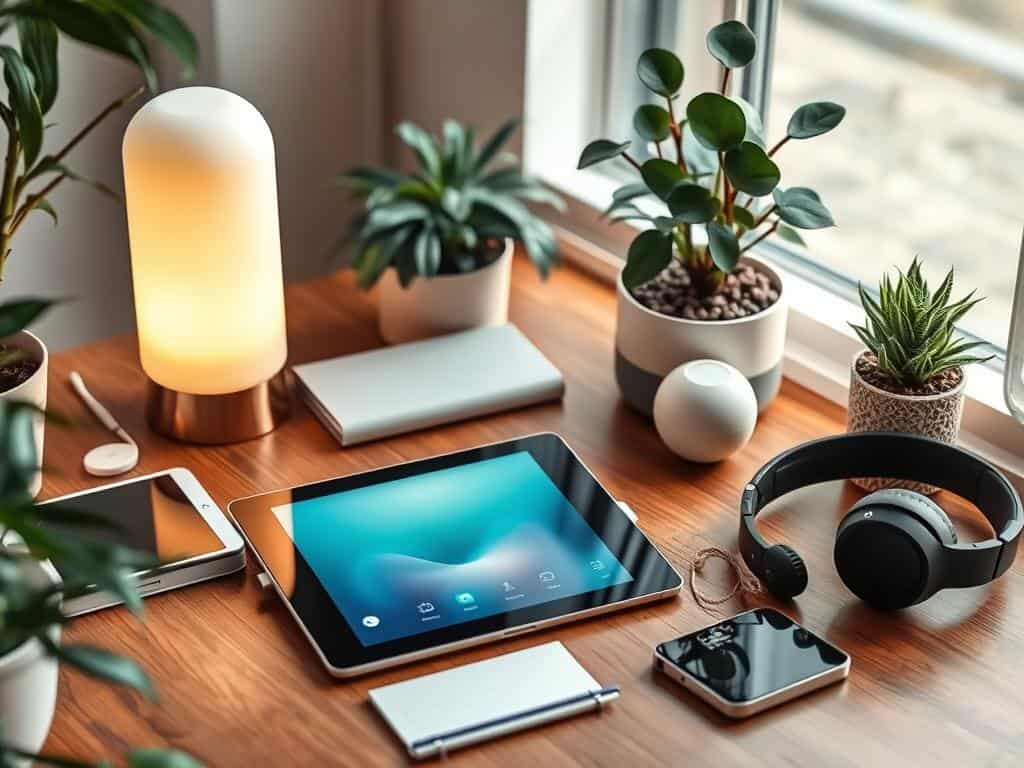
In today’s fast world, gadgets for mental wellness are key. They help us build emotional strength and well-being. These tools use new tech to help us adopt healthy habits.
Innovative Mental Wellness Gadgets
The Apollo Neuro wearable is a top pick. It helps reduce stress and anxiety for about 40% of users. The Mendi headband offers real-time brain feedback to improve brain health.
The Oura ring tracks important health metrics like heart rate and body temperature. It helps us understand our health better. The Baracoda BMIND smart mirror uses AI for personalized mental wellness advice, based on our mood.
Utilizing Feel-Good Devices for Everyday Life
Adding feel-good tech to our daily lives can boost our mood. The Apple Watch now tracks our moods and gives insights. Happy Ears Earplugs help us sleep better, which is good for our mental health.
While these gadgets work differently for everyone, they’re worth trying. They offer simple ways to manage stress.
Engagement through Social Media
Social media has both good and bad sides for mental health. Too much can mess with our sleep and make us anxious. But, it can also be a place for support and connection.
Good online interactions can make us feel better and more connected. This shows that social media can be positive if used wisely.
Conclusion
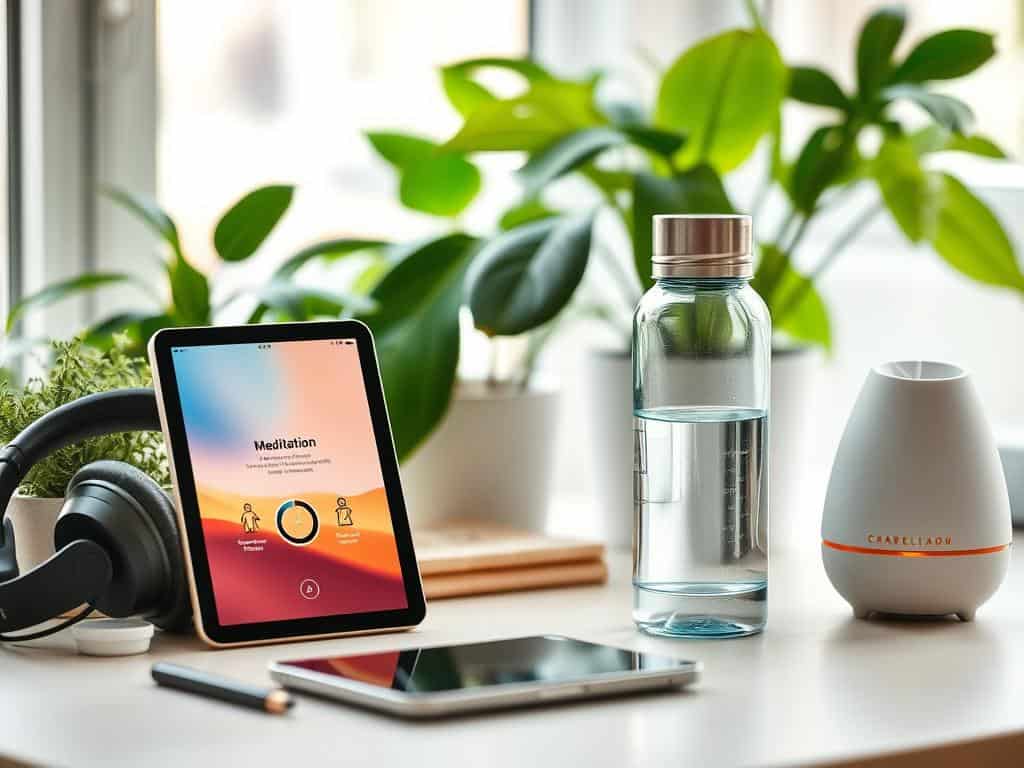
Technology and mental health are closely linked, with tech tools bringing both benefits and challenges. There are thousands of mental health apps available, making help more accessible. These gadgets offer new ways to tackle issues like anxiety, depression, and insomnia.
Yet, the quality and effectiveness of these apps can vary. Without strict rules and clear information, it’s hard to know what works best. This means I need to carefully pick apps that really help my mental health.
By using technology smartly, I can improve my well-being. It’s not just about finding the right apps. It’s also about how I use them. Exploring new tech can bring insights and positive changes, making technology a valuable tool for mental health.