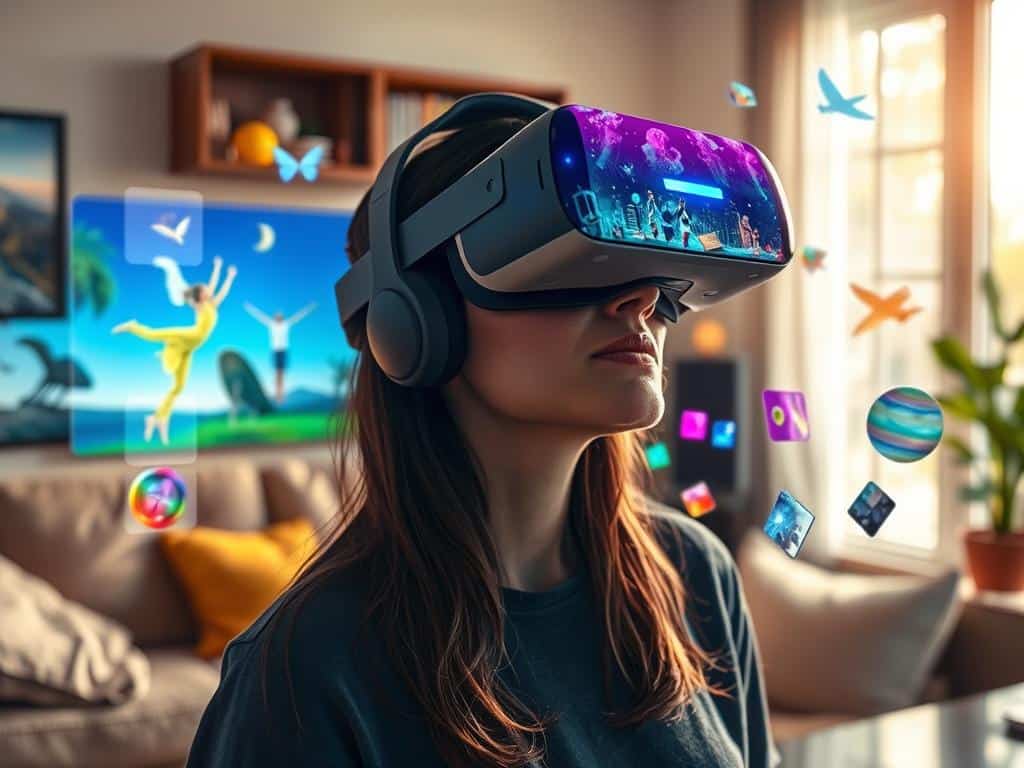
Life can feel overwhelming at times. We deal with stress, uncertainty, and lots of responsibilities. I remember a tough day when I felt lost in a routine. That’s when I found a VR experience that changed everything.
It took me to a world filled with colors, sounds, and a gentle breeze. I saw how VR can make us happier and more connected. Let’s explore how VR can be a friend in our search for happiness.
VR is more than just for games. It’s now a key part of our mental health. These gadgets use senses and environments to help us feel better. As we look into VR’s role in happiness, you’ll see how it can connect us to joy.
Key Takeaways
- Virtual reality can uplift mood and enhance feelings of joy.
- Lightweight devices like the VIVE Flow enable immersive experiences without bulk.
- Wide fields of view and high resolutions create captivating environments.
- Spatial audio technology enriches the immersive quality of VR experiences.
- Therapeutic applications of VR are emerging to support mental well-being.
The Intersection of Virtual Reality and Mental Well-being
VR for Happiness is gaining attention for its link to mental health. It shows how virtual reality can help improve emotional well-being. By diving into the science, we see VR’s power to change therapy and personal experiences.
The Science of Happiness with VR
Studies show VR can lower anxiety and boost mood. A Journal of Anxiety Disorders study found VR therapy reduces anxiety in phobia sufferers. Platforms like Bravemind at USC help veterans face trauma through VR.
These examples highlight VR’s role in emotional healing and recovery.
How VR Experiences Enhance Emotions
Immersive tech lets users explore detailed environments that spark sensory responses. Sounds and haptic feedback make the experience real. This technology benefits many, like those who find peace in virtual nature walks.
These walks lower stress levels. Using natural elements in VR offers a digital escape and emotional healing.
VR for Happiness: Immersive Technologies that Uplift
Virtual reality (VR) has a big role in improving mental health. Studies by Clelia Malighetti and others show VR can make people happier and less stressed. It’s a great tool for feeling better emotionally.
VR offers special experiences to help people feel good. These experiences are designed to uplift mental states.
Therapeutic Applications of VR
VR is used in many ways to help people, like in exposure therapy and virtual relaxation. These tech solutions create safe spaces for healing. They help users relax and feel better.
Students in a study felt happier and more joyful after using VR. This shows how well VR can work in helping people.
The Role of Haptic Feedback in VR Joy
Haptic feedback technology makes VR feel more real by adding touch sensations. Tools like haptic gloves let users feel virtual environments. This makes the VR experience more real and enjoyable.
Color and Sound: Keys to Creating Joyful VR Environments
Creating VR environments is not just about visuals. Color and sound are also key. Research shows colors and sounds can change how we feel.
By using the right colors and sounds, developers can make VR environments that uplift. This makes VR a powerful tool for happiness.
Conclusion
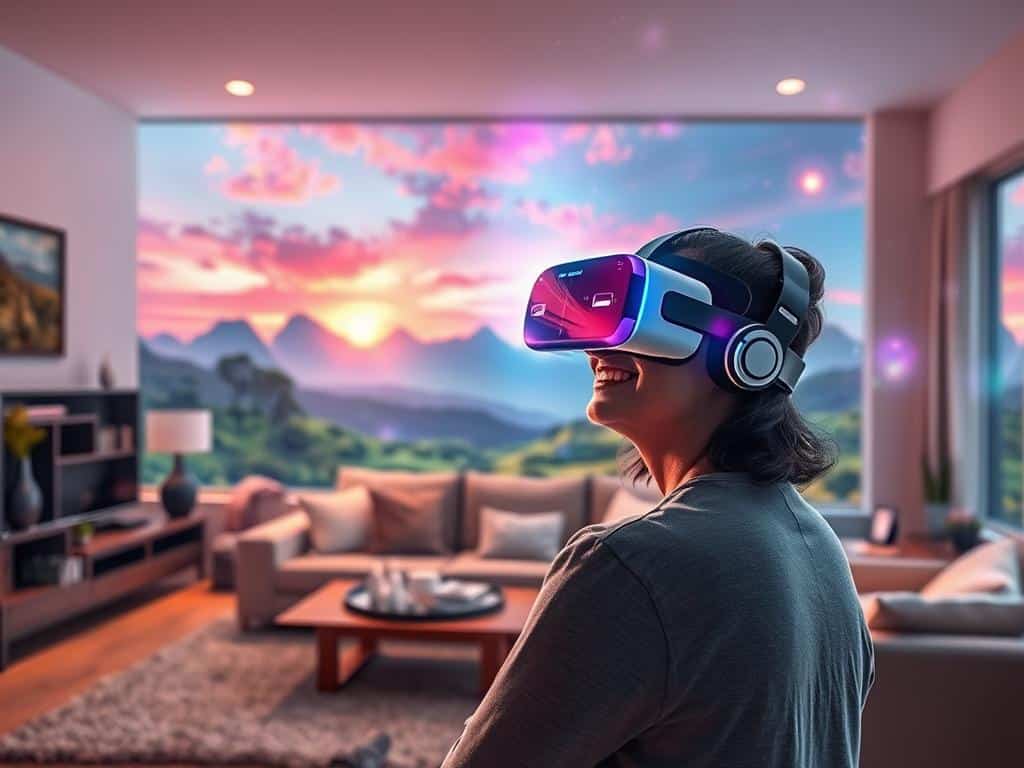
Exploring VR for happiness shows it can really boost our emotional well-being. This tech lets us dive into amazing experiences that make us feel good. These feelings can lead to a better life, sharper minds, and longer lives.
Studies prove VR can make us happier and more emotionally stable. It’s a game-changer for our mental health. In a world facing mental health issues, VR offers a way to uplift and inspire us.
The future of VR and positive psychology is exciting. It could change how we find joy. By using VR, we can find new ways to be happy and strong. I think we’re on the edge of a big change in how we feel emotionally.