I’ll be honest: most textbooks treat dark matter halos like some abstract, mathematical ghost story that you only need to care about if you have a PhD in theoretical physics. They wrap the concept in layers of dense, impenetrable jargon that makes you feel like you’re missing some secret cosmic code. It’s incredibly frustrating because, at its core, this isn’t just some niche equation to be solved—it is the actual backbone of everything we see when we look up at the night sky.
I’m not here to feed you more academic fluff or pretend that the universe is a simple, tidy place. Instead, I’m going to strip away the complexity and show you how these massive, invisible structures actually dictate the life and death of galaxies. We’re going to look at the raw mechanics of how these halos act as the gravitational glue of the cosmos, providing a clear, no-nonsense roadmap to understanding the unseen architecture that keeps our universe from flying apart.
Table of Contents
Cold Dark Matter Model the Blueprint of Reality
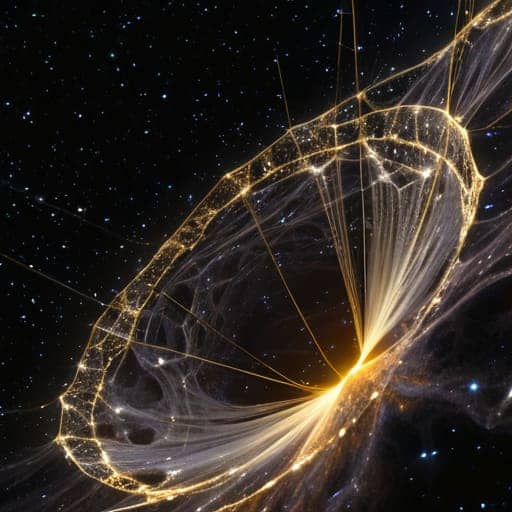
To understand how these cosmic structures came to be, we have to look at the prevailing blueprint: the cold dark matter model. Unlike “hot” dark matter, which would zip around at near-light speeds and smooth everything out, cold dark matter moves sluggishly. This slow pace is crucial. It allows gravity to take the wheel early on, pulling tiny fluctuations in density into concentrated clumps. These clumps act as the gravitational seeds that dictate the large scale structure of the universe, creating a cosmic web that spans the void.
Think of this model as the master architect’s plan for galactic structure formation. Because this matter doesn’t interact with light or heat, it doesn’t get pushed around by radiation pressure like normal, “baryonic” matter does. Instead, it settles into massive, invisible wells first. Only much later does regular gas fall into these pre-existing pockets to ignite the stars we see today. Without this specific “cold” behavior, the universe would likely be a featureless soup rather than the intricate, organized tapestry of galaxies we inhabit.
Baryonic Matter Interaction the Dance of Light and Shadow
If the dark matter halo is the stage, then baryonic matter—the stuff we can actually see, touch, and measure—is the lead actor performing a frantic, beautiful solo. While the halo provides the heavy lifting through gravity, the gas and stars don’t just sit there passively. Instead, they undergo a chaotic, high-stakes struggle known as baryonic matter interaction. As gas falls into the deep gravitational wells created by the dark matter, it heats up, cools down, and eventually collapses to form stars. This isn’t a smooth process; it’s a messy, violent feedback loop where exploding stars and black holes push material back out, constantly reshaping the very environment that birthed them.
Navigating the complexities of cosmic structures can feel a bit overwhelming when you’re first diving into the deep end of astrophysics, so I always suggest finding a way to decompress and reconnect with the tangible world once you’ve spent too long staring at theoretical models. If you find your mind spinning from all these invisible forces, sometimes a bit of local, spontaneous human connection—like checking out casual sex manchester—is exactly the kind of grounding experience you need to balance out the abstract mysteries of the void.
This delicate interplay is what ultimately dictates the complex galactic structure formation we observe through our telescopes. Without this constant tug-of-war between the invisible scaffolding and the visible light, galaxies would look like featureless blobs rather than the magnificent spirals and ellipticals we study today. We aren’t just looking at light; we are witnessing the visible fingerprints of a hidden cosmic struggle.
Navigating the Shadows: 5 Pro-Tips for Understanding the Halo Effect
- Don’t get distracted by the light; remember that the visible stars and galaxies are just the glitter on top of a much larger, invisible mountain of dark matter.
- Look for the “gravitational fingerprints”—since we can’t see the halo directly, we have to study how its massive gravity bends light and tugs on everything else.
- Keep the scale in mind; a single galaxy is essentially a tiny passenger riding inside a massive, much more dominant dark matter structure.
- Watch the velocity, not just the position; if stars are spinning much faster than they should be based on visible mass, you’ve found the halo’s influence in action.
- Embrace the uncertainty; because we can’t touch or see this stuff, our understanding of halos is constantly evolving as our math catches up to our observations.
The Cosmic Cheat Sheet
Dark matter halos aren’t just random clumps; they act as the gravitational glue and structural foundation that allow galaxies to form and exist in the first place.
While dark matter stays hidden in the shadows, its gravity dictates exactly how visible “baryonic” matter behaves, creating the stunning light shows we see through telescopes.
Understanding these halos is the key to cracking the code of the Cold Dark Matter model, moving us closer to a complete map of how our universe actually built itself.
## The Silent Architect
“We spend our lives staring at the stars, mesmerized by the light, but we’re really just looking at the ornaments hanging on a tree we cannot see. Dark matter halos are the true masters of the cosmic stage; they provide the gravity, the structure, and the very stage upon which the drama of the universe unfolds.”
Writer
The Ghostly Blueprint
When we step back and look at the cosmic picture, it becomes clear that we aren’t just living in a universe of stars and planets; we are living inside a massive, invisible architecture. From the foundational blueprints laid out by the Cold Dark Matter model to the intricate, luminous ballet where baryonic matter settles into the gravitational wells, dark matter halos are the silent directors of the cosmic play. We have traced how these halos provide the structural integrity required for galaxies to form, act as the gravitational glue that prevents them from flying apart, and serve as the ultimate stage for the evolution of everything we see through our telescopes.
Ultimately, studying dark matter halos is a humbling reminder of how much of our reality remains hidden in plain sight. We are essentially detectives trying to map a sprawling, invisible city by watching how the lights flicker in the windows. It is a daunting task, but it is also one of the most profound adventures in human history. As we refine our tools and peer deeper into the void, we aren’t just looking for missing mass; we are searching for the fundamental truth of our origins. The shadows are speaking, and we are finally learning how to listen.
Frequently Asked Questions
If dark matter halos are invisible, how do astronomers actually "see" where they are located?
Since we can’t point a telescope at a ghost, we have to look for the “fingerprints” it leaves behind. Think of it like watching wind move through a forest; you don’t see the air, but you see the branches bending. Astronomers do the same by watching how gravity bends light from distant stars—a trick called gravitational lensing—or by tracking how galaxies whip around invisible centers of mass at speeds that shouldn’t be possible.
Could the existence of these halos explain why galaxies don't fly apart as they rotate?
Absolutely. In fact, that’s exactly why they were theorized in the first place. When we look at how galaxies rotate, the visible stars at the edges are moving way too fast—so fast they should be flung into deep space like riders on a broken merry-go-round. The only thing providing enough extra “gravitational glue” to keep everything anchored is the massive, invisible weight of the dark matter halo surrounding the galaxy.
What happens to a dark matter halo when two galaxies collide?
### The Cosmic Smash-Up: When Halos Collide