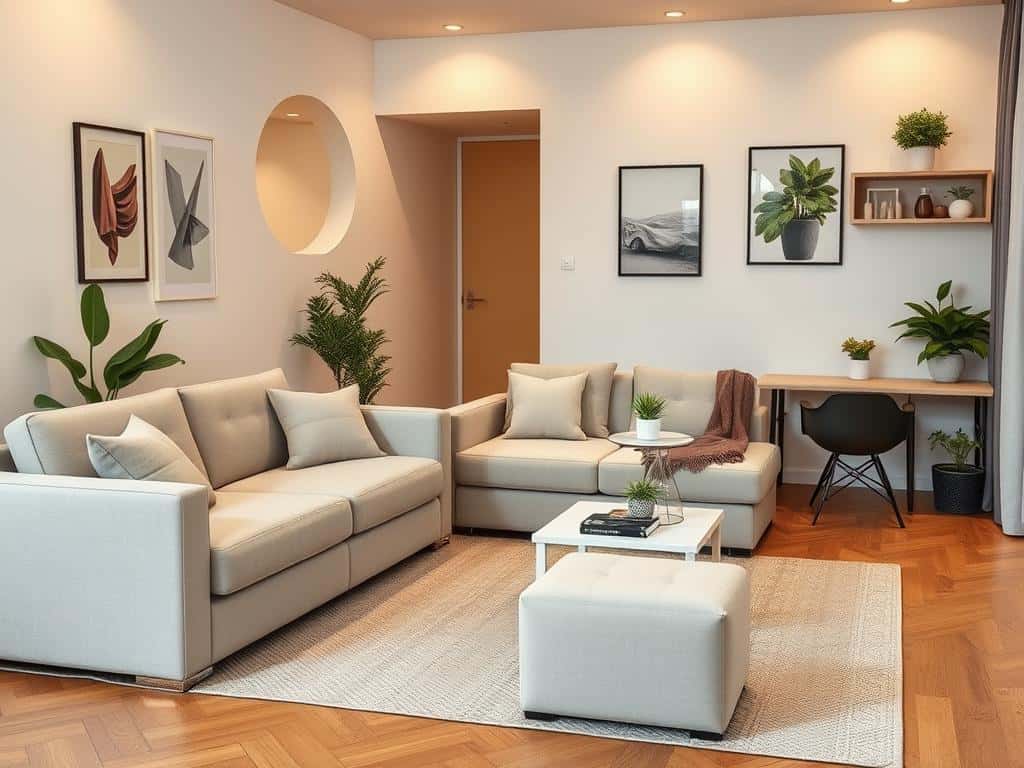
Standing in my living room, surrounded by lush greenery, I feel deep peace. The contrast of cream walls and greenery reminds me of outdoor retreats. Living walls, or vertical gardens, have turned my home into a peaceful haven.
This decor trend is not just about looks; it’s about our need for nature. It offers many benefits, like purifying the air and improving our mood. Let’s see how these green spaces can make our homes better and our lives richer.
Key Takeaways
- Living walls bring natural beauty indoors, improving mood and health.
- A soothing cream and green color scheme promotes peace and relaxation.
- Texture integration through rugs and throws adds depth and interest.
- Plants purify the air, creating a fresh living environment.
- Soft lighting is vital for cultivating a calming atmosphere.
- Vertical gardens are ideal for small spaces, adding vibrancy and life.
- Proper plant selection is key for a thriving living wall.
What Are Living Walls?
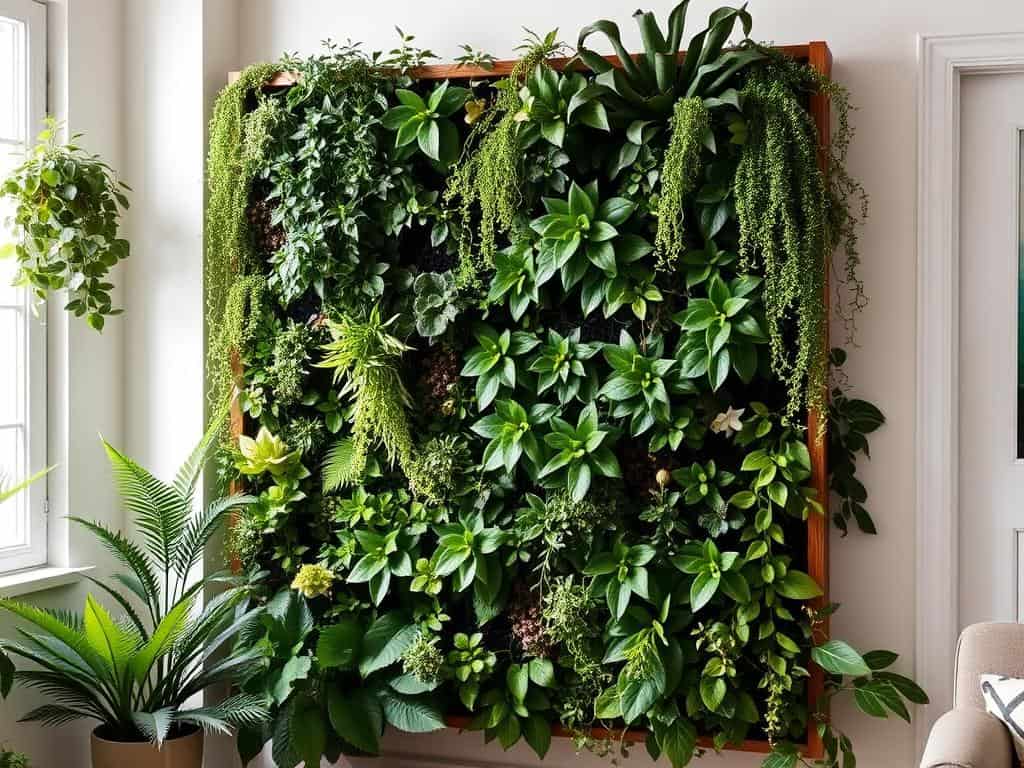
A living wall, also known as a vertical garden or green wall, is more than a unique decoration. It lets plants grow up a wall, turning it into a lush display of nature. This idea combines art with space-saving design. It became popular thanks to French botanist Patrick Blanc, but has roots in ancient wonders like the Hanging Gardens of Babylon.
Definition and Concept
A living wall is a green solution that makes spaces look better and helps the environment. It uses different materials like rockwool, soil, and coconut coir to support plants. You can find living walls in busy offices and quiet homes, with designs ranging from simple to complex.
Benefits of Living Walls
Living walls do more than look good. They help clean the air by removing pollutants. Studies show they can reduce stress and improve thinking skills. While all living walls are beautiful, some are better at cleaning the air than others.
Outdoor living walls can also cool buildings and reduce noise. This saves energy and makes places quieter. They also help support local wildlife by providing homes and food.
Living walls are becoming more common in cities, malls, and offices. They make buildings look better and connect us with nature. This has many benefits for people and the planet.
How to Create Your Own Living Wall
Creating a living wall can turn any space into a vibrant oasis. First, it’s important to know the basic requirements for a successful installation. This project can be small or large, depending on your design and space.
Basic Requirements
Start by picking the right wall for your living wall. The wall must hold the weight of plants and water, which can be heavy. Make sure the wall is anchored well.
There are many systems to choose from, like soil-based or hydroponic. These systems have pots for easy plant changes. This helps plants get the right amount of sunlight.
For watering, an automated drip system saves time and water. Manual watering is also an option. Good lighting is key, and with care, living walls can last up to four years.
Popular Plant Choices
Choosing the right plants is key for a living wall’s success. Plants for shaded areas include Pachysandra, Heuchera, and Vinca minor. For sunny spots, try helianthemum or sedum.
Compact plants under 50cm are best for easy maintenance. They also let sunlight reach lower plants. Building a living wall is doable. Start by assembling a tray, filling it with compost, and planting plug plants.
Attach the trays to the wall and connect the irrigation system. With the right plants and system, you can turn any wall into a stunning vertical garden.
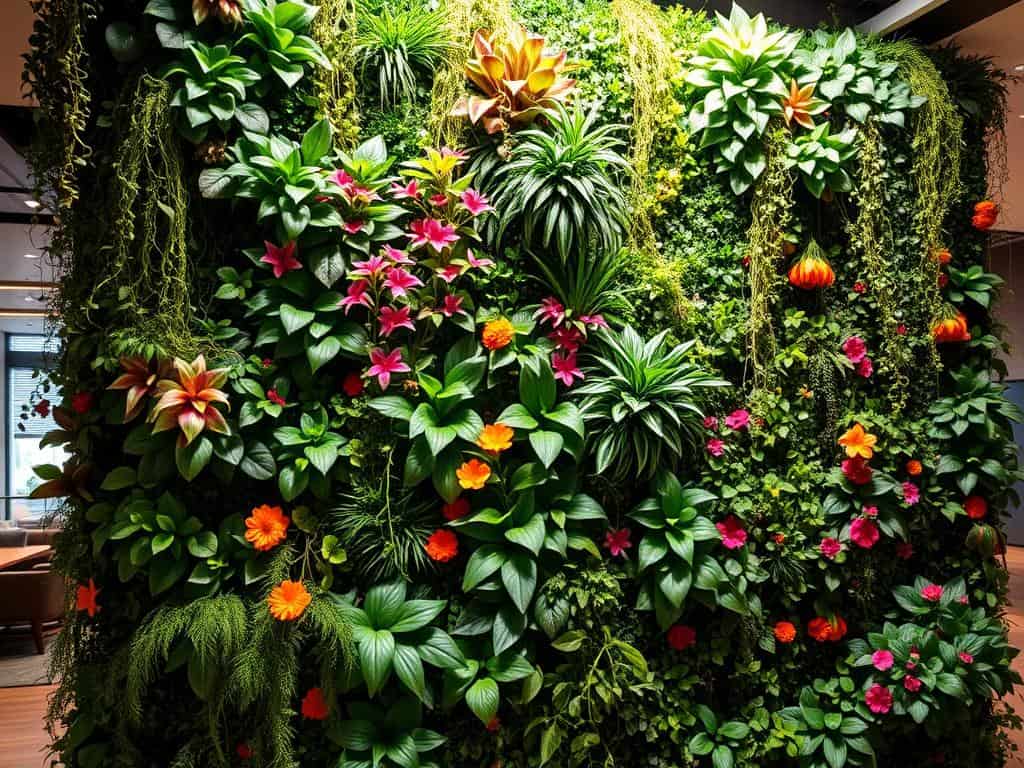
Living Walls: The Ultimate Happy Space Decor Trend
Creating a living wall can change indoor spaces a lot. It mixes beauty with nature in a special way. There are many design options for living walls, from simple to complex.
Designs can range from a single plant to many different species. A good living wall fits your style and the room’s size.
Design Options for Living Walls
Designs often include natural textures and materials. These add to the living wall’s beauty. Plants of different heights and colors add depth and interest.
Choosing the right plants is key. Plants like ivies, spider plants, and ferns are good for indoor spaces. They improve air quality and make the space lively.
Maintenance Tips
Maintaining a living wall needs dedication. It involves watering, trimming, and replacing plants. It might seem like a lot of work, but it’s worth it for a healthy indoor climate.
Knowing what your plants need is important. Some plants need a lot of light, while others can do with special grow lights. Starting small helps manage expectations about how much time and effort it takes.
Using drip irrigation makes caring for living walls easier. It’s also important to anchor the wall well. This is because it can get heavy, up to 20 pounds per square foot when wet. Following these tips keeps your living wall looking great and adds to your indoor green spaces.
Conclusion
Living walls change how we decorate our homes, mixing beauty with care for the planet. They bring green spaces inside, making our homes look better and feel healthier. This trend shows we’re moving towards designs that connect us with nature more.
Exploring living walls, I see how they can make any room feel new again. Systems like Exubia help me grow beautiful gardens indoors. These gardens clean the air and help control the temperature, making my space quieter and cooler.
Setting up a living wall can make any room a happy place to be. With the right care and plants, these green walls remind us of nature’s importance in our lives. They are a lasting symbol of our connection to the earth.