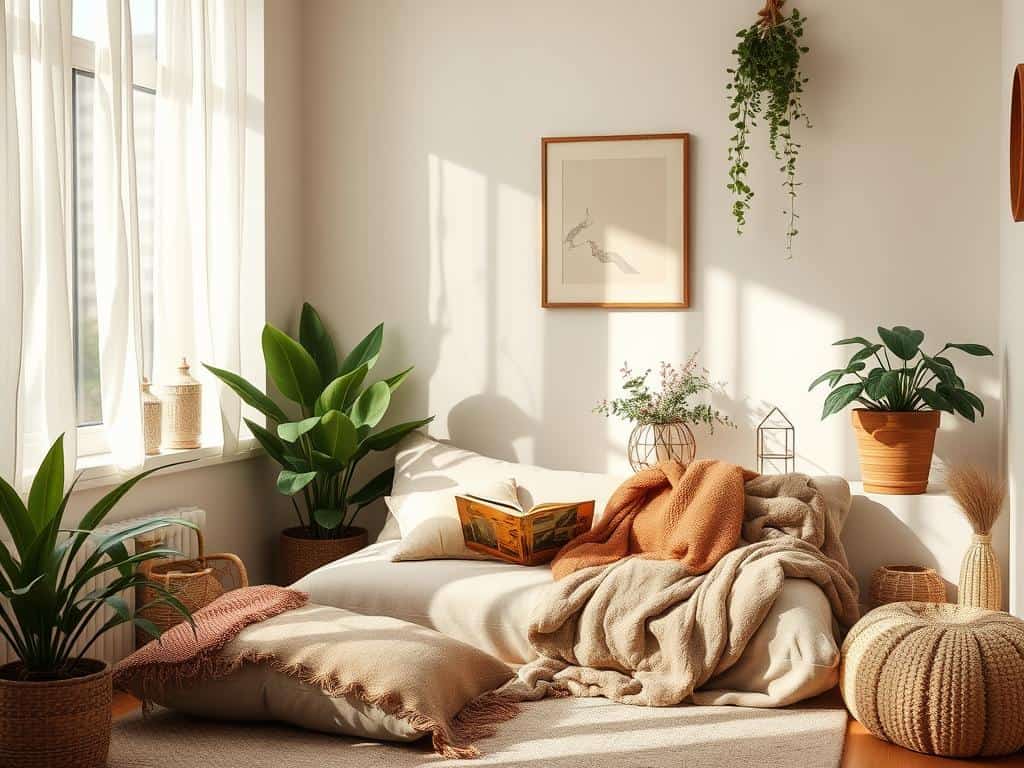
At times, the world outside can feel too much. That’s when I look for a quiet spot in my home. I remember turning a simple reading nook into a peaceful retreat. It’s filled with soft cushions, calming colors, and the sound of nature.
Creating such spaces is more than just making them look good. It’s a place where we can rest our minds and souls. In this article, I’ll show you how to make any part of your home a cozy haven.
Key Takeaways
- Colors such as greens and blues create a calming atmosphere in interiors.
- Incorporating soft textures like cushions and throws enhances comfort and relaxation.
- Decluttering is essential for maintaining a peaceful and relaxing environment.
- Using aromatherapy can significantly enhance the calming effect of a space.
- Lighting plays a critical role; opt for soft, warm lights to promote tranquility.
The Importance of Calming Spaces for Mental Well-Being
Creating calming spaces is key for better mental health. These areas help us relax and get away from daily stress. In today’s fast world, taking breaks is not just nice; it’s necessary for handling stress and emotions.
Understanding the Need for Relaxation
Many people don’t realize how important relaxation is. Our busy lives often ignore our well-being, causing more stress and anxiety. Using tools like textured balls and massage items can make a big difference in feeling calm.
The Connection Between Environment and Mood
The place we are in affects our mood and mental health. Studies show that calm spaces at home or work can really lower stress. For example, being near nature, even through pictures, can lower blood pressure and heart rate.
Listening to nature sounds can calm us down quickly. Scents like lavender can also make us feel better by reducing anxiety. Making our surroundings calm is vital for our mental health.
Tips for Designing Calming Spaces
Creating a peaceful home involves smart design choices. A few key decisions can make your space feel calm and inviting.
Choosing the Right Colors
Choosing calming colors is key for a tranquil home. Blue and green are great because they relax and reduce stress. Use these colors in your living room or bedroom for a peaceful vibe. Stay away from bright colors that can upset your calm.
Incorporating Natural Elements
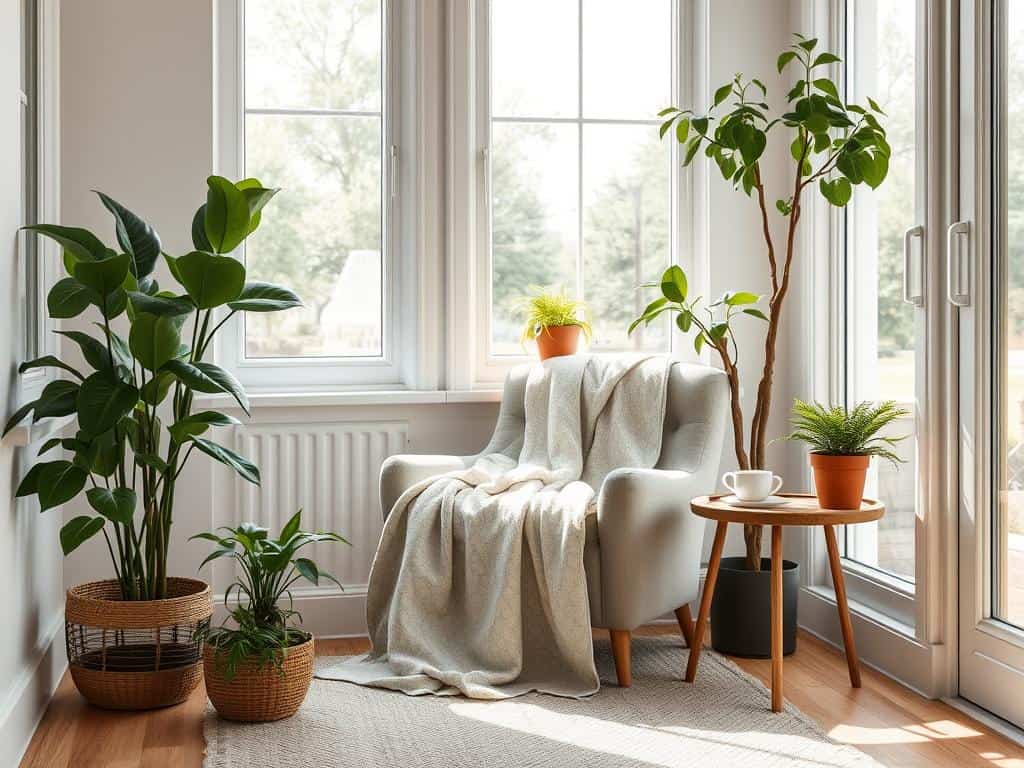
Adding natural elements changes your home’s feel. Houseplants like palms and succulents make your space look good and air cleaner. They also lower anxiety. Wooden furniture adds to the calm, reminding you of nature.
Decluttering for Peace of Mind
Decluttering makes your space clear and calm. Spend 15 to 30 minutes each day cleaning. This small effort can make a big difference in a week. A tidy home means less distraction and more calm when you’re home.
Importance of Lighting and Sound
Lighting sets the mood for relaxation. Choose soft, warm lights for a calming feel. Adding nature sounds can block out noise. Heavy draperies or foam tiles help keep your space quiet and peaceful.
Utilizing Texture
Using different textures adds depth to your space. Mix plush materials like velvet or faux fur with textured cushions. This mix creates a cozy, inviting atmosphere.
Conclusion
Creating calming spaces is key for relaxation and better emotional health at home. This article shares ways to make any area peaceful. From picking the right colors to adding natural elements, every step helps create a soothing atmosphere.
Using relaxation techniques helps me understand how my surroundings affect my mind. Studies show kids greatly benefit from calm places, as 35% have faced tough times. Creating a Calm Down Corner in my classroom shows how special spaces can help kids manage their feelings and think deeply.
Creating a peaceful home is a personal journey that lets me express myself. I suggest making small changes with care and creativity. This can deeply improve the calmness of my home. By doing this, I build a stronger bond with my space, leading to better well-being and harmony.